
Alex Fesak
CEO
Implementing AI Meeting-to-Requirements Automation for B2B SaaS Product Teams: A Secure Workflow from Calls to PRDs, Jira Epics, and Release Notes
2026-05-18
Set the workflow goals and success measures first
 From call to PRD, Jira items, and release notes
AI meeting-to-requirements automation for B2B SaaS tends to hold up when the intended artifacts, decision rights, and integration touchpoints are treated as primary product-operations concerns rather than tooling details. Executive stakeholders commonly evaluate whether the workflow consistently produces PRDs, Jira epics and stories, and release communications that shorten cycle time without adding ambiguity or governance exposure. Typical success measures include a consistent PRD structure, traceability to source conversations, reviewer agreement on scope, and less rework between Product and Engineering. These criteria usually shape vendor evaluation and implementation discussions in BOFU buying cycles.
Define required outputs and handoffs
Teams often find that “meeting summaries” and “requirements” diverge once outputs must withstand roadmap review and engineering estimation. Durable workflows typically converge on a repeatable artifact set—call-derived PRDs, Jira epics and user stories with acceptance criteria, and release notes aligned to shipped work—paired with explicit handoffs between Product, Engineering, and go-to-market partners.
Clarify ownership and approvals
Automation shifts accountability boundaries, particularly when drafts appear faster than teams can validate them. In mature environments, approval expectations separate draft generation from publication, keeping decision points auditable and reducing confusion over which PRD or Jira item represents committed scope.
Protect sensitive information before automating
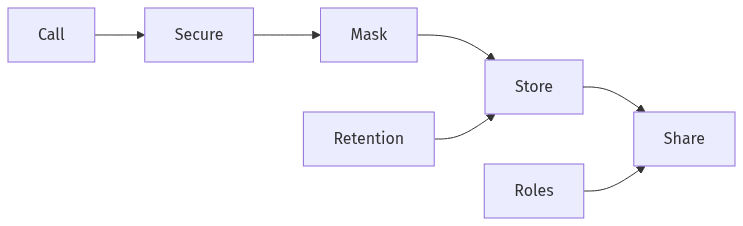 Access, masking, and retention guardrails around outputs
Security posture often determines whether meeting-to-requirements automation progresses beyond pilots, because transcripts and derived artifacts can consolidate sensitive customer data into a reusable form. Enterprise buyers commonly review SOC 2 alignment, audit logs, encryption, and retention controls alongside model performance. Exposure risk typically increases when call content moves across tools, teams, and environments without consistent policy enforcement. Governance expectations often extend beyond transcripts into PRDs, Jira fields, and release communications, especially where regulated customers, contractual confidentiality, or internal access boundaries apply.
Limit access to what teams need
Least-privilege RBAC becomes a key design constraint because the workflow spans Product, Engineering, Sales, and Customer Success with different visibility expectations. Alignment with existing SSO/SAML group structures and Jira/Confluence permissions often serves as the practical benchmark for whether access control remains workable as usage scales.
Handle sensitive data and retention carefully
PII redaction and retention controls often matter more than summarization polish once automation produces durable artifacts. Minimization expectations typically apply to raw recordings, transcripts, prompts, and generated outputs, supported by audit logs and retention policies that reflect compliance requirements and customer commitments.
Turn calls into consistent PRDs teams can trust
Call-driven requirements often break down not because insights are absent, but because artifacts lack a stable structure that reviewers can scan and compare across initiatives. Standardized PRDs reduce interpretive overhead by keeping scope, assumptions, constraints, and acceptance criteria consistently visible. Trust also depends on verifiability: leadership teams frequently require a defensible link between what stakeholders said and what entered the roadmap. In BOFU evaluations, PRD quality is commonly assessed through completeness, clarity, and traceability, not the fluency of generated prose.
Standardize PRD expectations
Consistency in PRD elements often distinguishes scalable automation from ad hoc note conversion. Common expectations include a clearly stated problem and intended outcome, scoped requirements, acceptance criteria, risks, and open questions, expressed in a format compatible with Confluence conventions and cross-team review patterns.
Keep decisions connected to source conversations
Traceability reduces the perceived “black box” of AI-generated requirements by anchoring key assertions to source evidence. Links to meeting moments, transcript excerpts, or call segments often serve as the audit-friendly bridge between discovery conversations and shipped product decisions.
Create Jira work items with review safeguards
Jira automation becomes most useful when generated work items match the organization’s established ticket language, fields, and definitions of done. Misalignment in issue types, required fields, or naming conventions commonly creates friction that offsets time savings and adds rework for Engineering. Human control remains a recurring executive requirement, since hallucinated scope or missing acceptance criteria can propagate into estimation and delivery. Differentiation in vendor evaluations often shows up in how cleanly outputs map to Jira schemas while preserving auditability, permission boundaries, and traceable links back to PRDs and call evidence.
Match Jira items to existing ways of working
Generated epics and stories are typically judged by fit with established Jira configurations, including custom fields, labels, components, and acceptance-criteria conventions. Compatibility with Confluence-linked PRDs and existing roadmap taxonomies often determines whether automation feels additive or disruptive.
Use a review step before publishing tickets
Review safeguards act as the line between draft artifacts and authoritative backlog items. A controlled queue and explicit approval ownership commonly reduce the chance that low-confidence outputs enter sprint planning, while maintaining the speed associated with automated drafting.
Validate quality and improve over time
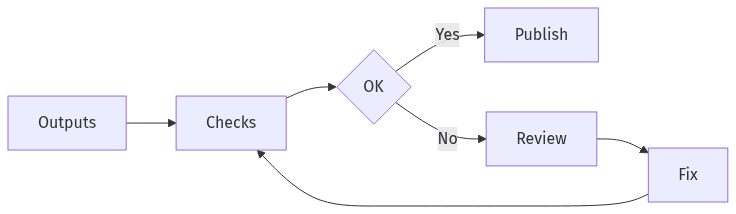 Quality checks with exception routing and feedback loop
Quality validation in requirements automation typically moves from subjective impressions to reliability signals tied to delivery. Organizations often track whether generated PRDs and Jira items lead to tighter estimates, fewer scope reversals, and lower defect leakage, rather than focusing only on summary accuracy. Over time, stronger programs treat requirement quality as a governed metric, incorporating reviewer agreement and artifact-to-artifact consistency. Exception handling remains important because weak outputs can spread quickly once integrated into Jira and Confluence, eroding confidence in the workflow and slowing adoption across stakeholders.
Measure usefulness, clarity, and consistency
Measurement usually centers on completeness of acceptance criteria, clarity of scope, and adherence to internal templates. Reviewer alignment often functions as a proxy for whether artifacts reduce cross-functional debate, while traceability coverage indicates whether decisions remain defensible in audits and retrospectives.
Watch for issues and route exceptions
Low-confidence outputs often correlate with noisy audio, ambiguous stakeholder language, or sensitive content requiring rigorous redaction. Early detection and clear routing for review typically prevent flawed artifacts from becoming backlog “facts,” preserving trust in the system and limiting downstream rework.